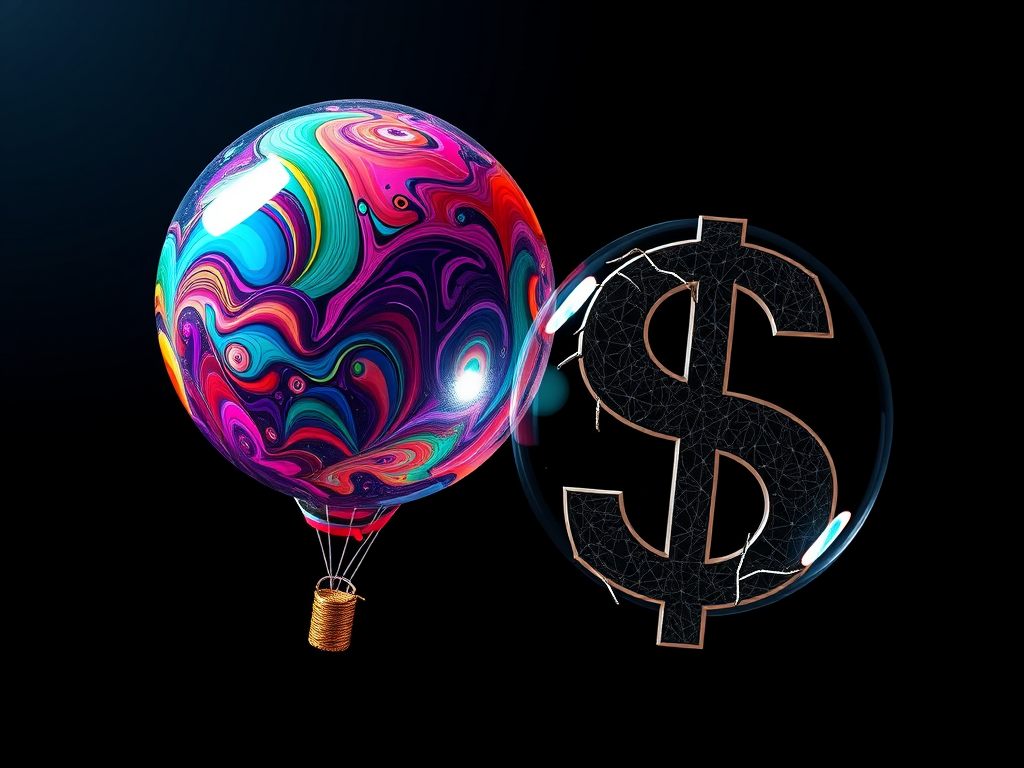
What is a bubble and are we in one? First, there are at least three different types of bubbles.
One is where the purveyors of said product or service are overhyping it. Sometimes referred to as overpromise/underdeliver, a hype bubble occurs when companies delivering services create the impression that if you aren’t buying their product, you are missing out. FOMO generates a lot of interest, and we’re seeing a massive uptick in usage. Interest in the product becomes word-of-mouth, and other people join in, further inflating the usage bubble.
A second kind of bubble is a financial one. One of the most famous was the Tulip bubble running from around 1634 to 1637. Speculation on tulips grew to such heights that the valuations placed on bulbs were far beyond any intrinsic value or practical ability to sell them.
One counter to a bubble is a defensive posture. Here, a company will announce something is on the horizon that will vastly outperform anything currently on the market. This vaporware can take the wind out of competitors’ sails and act as a guard against bubbles, since it creates a wait-and-see approach.
What happens when a bubble bursts? In the tulip bubble, individual bulbs were selling at the peak for 10 times the annual income of a skilled artisan. In effect, the product had such hyperinflation that it was beyond the reach of a reasonable audience. Today, we have some AI companies that are losing 5 billion dollars per quarter. Considering that this is before they address the copyright theft issues, their long-term costs are potentially even greater. Unlike the tulip craze, this isn’t a valuation of what they deliver, but instead what it costs them to make & distribute the bulbs at the current prices they are sold at. If revenue is just 10 billion per year but a company loses 20 billion per year delivering those services, it needs to quadruple prices to break even, assuming that doesn’t dampen demand. That’s the financial bubble.
But we are also starting to see the hype bubble hitting its peak. A study at MIT found that 95% of AI projects had no positive ROI. If a business invests in the hope that it will cut costs and improve ROI, but it doesn’t… eventually, common sense returns, and nobody will buy the product.
It doesn’t mean AI in general isn’t a helpful tool, but the current hype bubble and financial bubble are off by orders of magnitude, and that is a burst waiting to happen. Unfortunately, that will harm viable uses of AI because people will be hesitant to invest once the bubble bursts. History can be a guide, as irrational exuberance often leads to catastrophic outcomes. Read more.
Are We in an AI Bubble? Insights and Risks Explored